
CES 2026 Through a Builder’s Eye
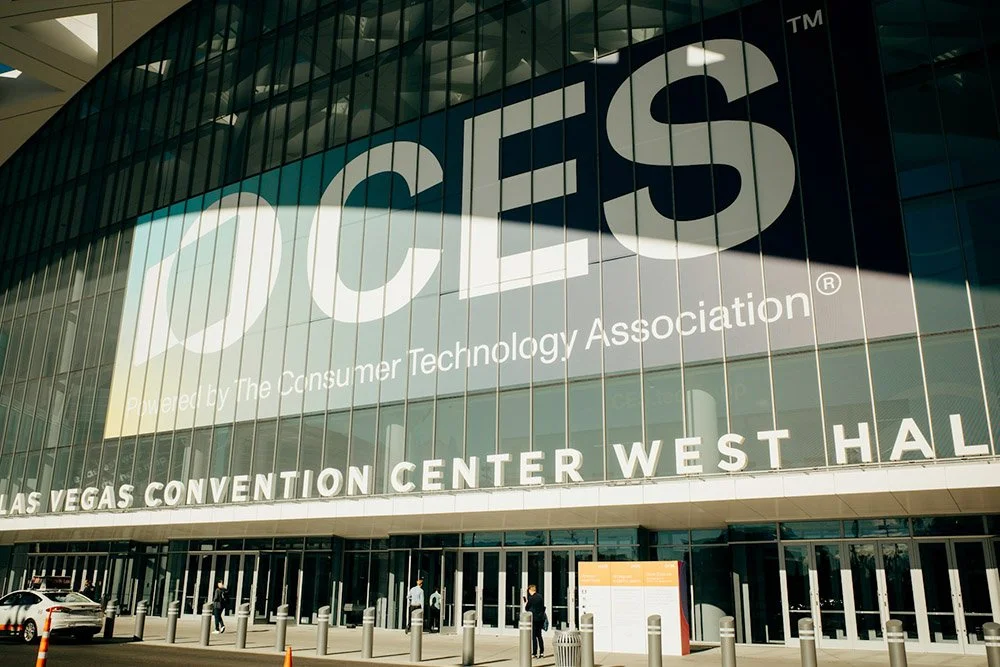
CES is always a pressure test. Big ideas, global attention, tight timelines, and zero tolerance for things that do not work. By the time the doors open, every decision has already met reality.
This year, David Cogswell walked the floor at CES 2026. From that designer/builder’s vantage point, what stood out was not who went biggest. It was who went smarter. The strongest booths were not chasing spectacle. They were making disciplined decisions about storytelling, theming and structural simplicity.
Seen through a builder’s eye, the shift was clear.
Smaller Footprints, Better Thinking
There were fewer oversized, overbuilt environments and far more intentional use of space. Booths (20x20 to 40x40 footprint) showed up everywhere. Clearer budgets. Clearer priorities and on key messaging within a smaller footprint.
Fabric graphics, SEG systems, modular framing, and lightweight structures were used thoughtfully, not as compromises but as tools. Some of the most impressive booths married modular with custom accents (counters, displays, even scenic environments). The result was booths that felt confident, efficient, and well considered.
This kind of thinking shows up most clearly in smartly executed trade show booth builds, where structure and storytelling work together.
CES Is Becoming Theater, Not a Spec Sheet
CES is still a technology show, but the way technology is presented has changed. Instead of spec-heavy walls, many booths leaned into storytelling.
Architecture, lighting, and AV carried more of the message. Products were shown in context. Demos explained how systems actually work together. Hardware became a teaching tool, not just something to look at.
The show felt easier to navigate and far more human, albeit robots were everywhere.
Interaction Still Wins
Hands-on experiences consistently outperformed passive ones. Spaces where people could try, touch, and engage led to longer conversations and clearer understanding.
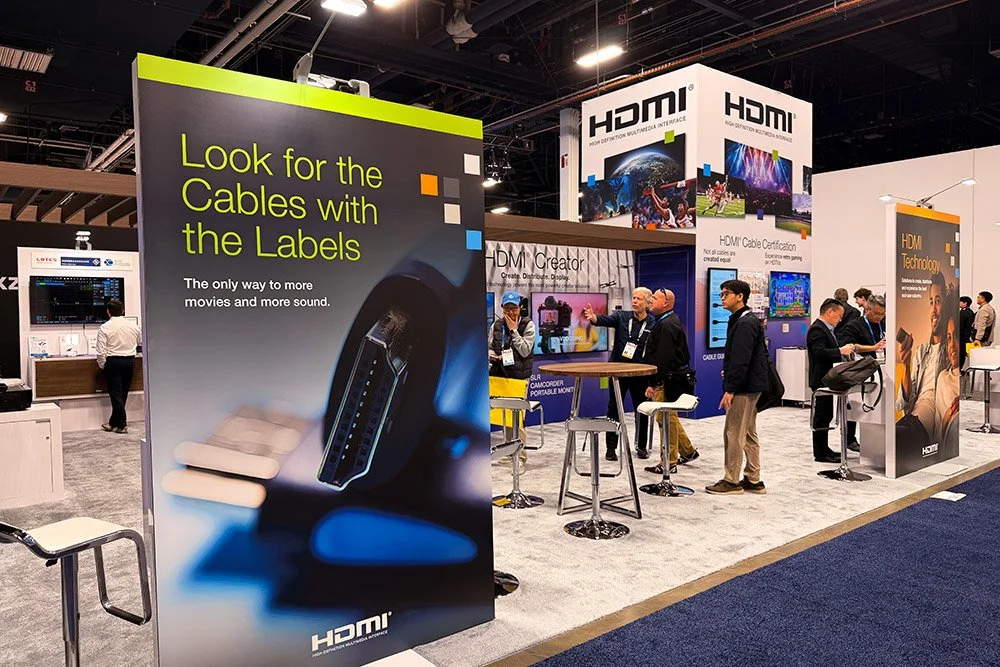
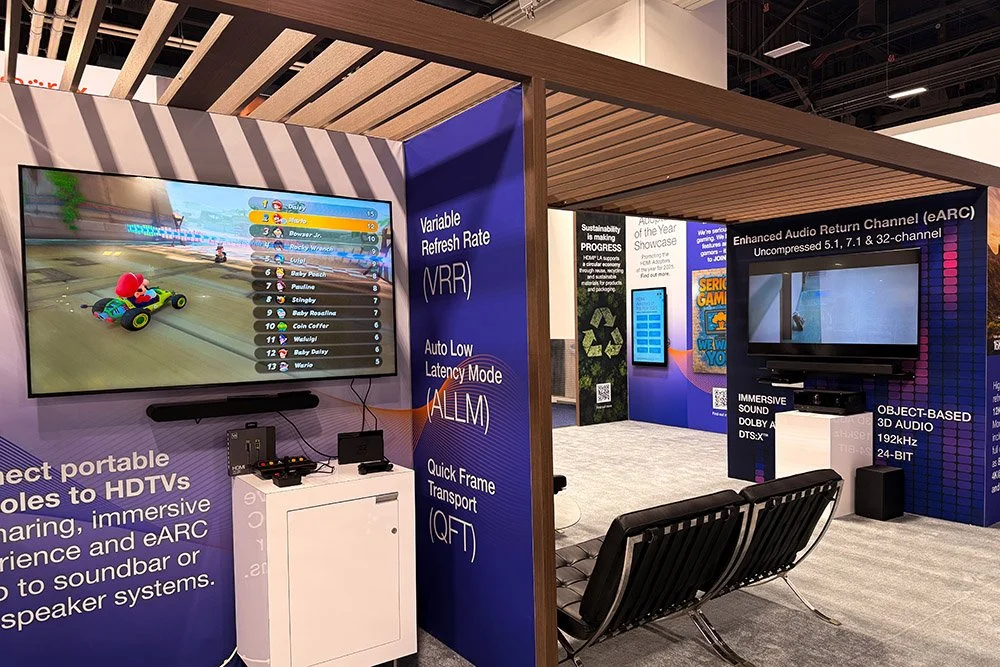
One booth we worked on at CES leaned into this approach by breaking complex features into clear, hands-on zones. Instead of explaining everything at once, each area let people experience a specific capability, from gaming to audio, and understand it quickly. The structure stayed simple, but the interaction did the heavy lifting.
Simplicity Was Intentional
The calmer feel of the show floor was not accidental. Visual noise was reduced so messages could land faster. Cleaner layouts made it easier to move through booths and easier to understand what companies actually do.
From the build side, that kind of restraint signals experience. It takes confidence to leave things out. The best environments were edited, not empty.
Screens and AV, Used With Purpose
Screens were everywhere, but their role has evolved. Even smaller booths integrated AV early, often as part of the structure itself.
Screens were no longer accessories. They were architectural elements. Lighting and video worked together to guide attention and shape space. When done well, it felt seamless.
This level of integration is now standard in strong brand activation environments, where AV and structure have to work as one.
Built Smart, It Shows
From a builder’s perspective, the most successful booths shared the same fundamentals. Clear structure. Logical flow. Materials that made sense. Systems that installed cleanly and held up through the show.
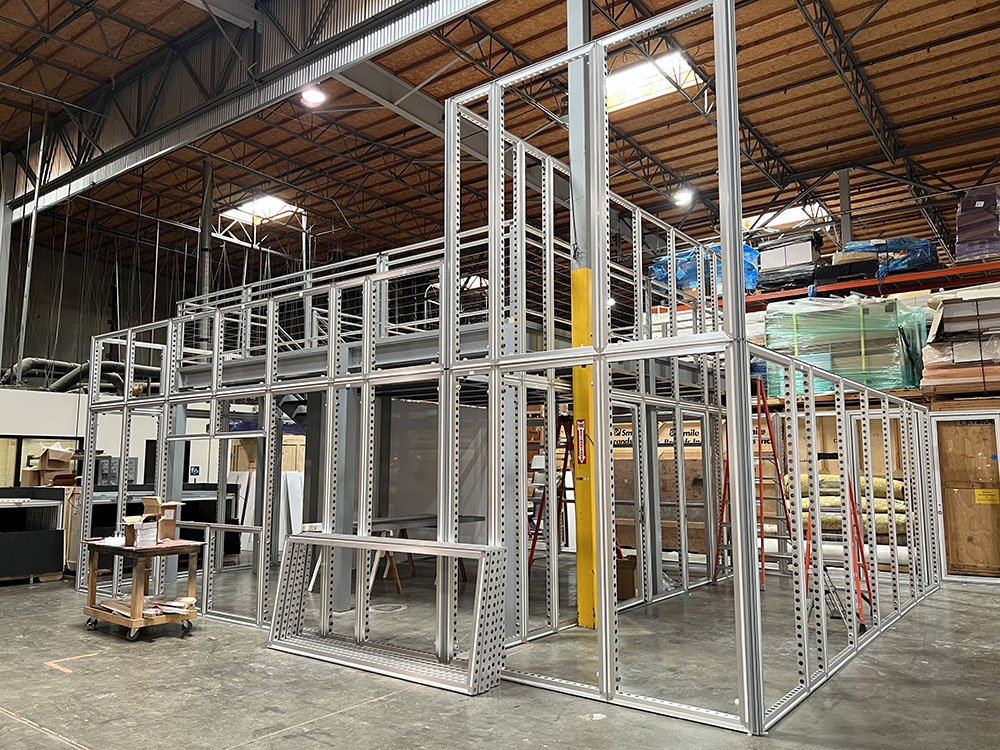
Modular frameworks like beMatrix systems played a big role here, allowing teams to move fast without sacrificing design intent.
Nothing felt accidental. Nothing felt fragile.
What CES 2026 Made Clear
CES 2026 rewarded discipline. The strongest work came from teams who made smart decisions early and stuck to them. When design, build, and story are aligned from the start, it shows on the floor. Seen through a builder’s eye, this year’s show felt more thoughtful and more intentional.
That is a good direction for where this industry is headed.