
Why Bigger Booths Are Losing the Room
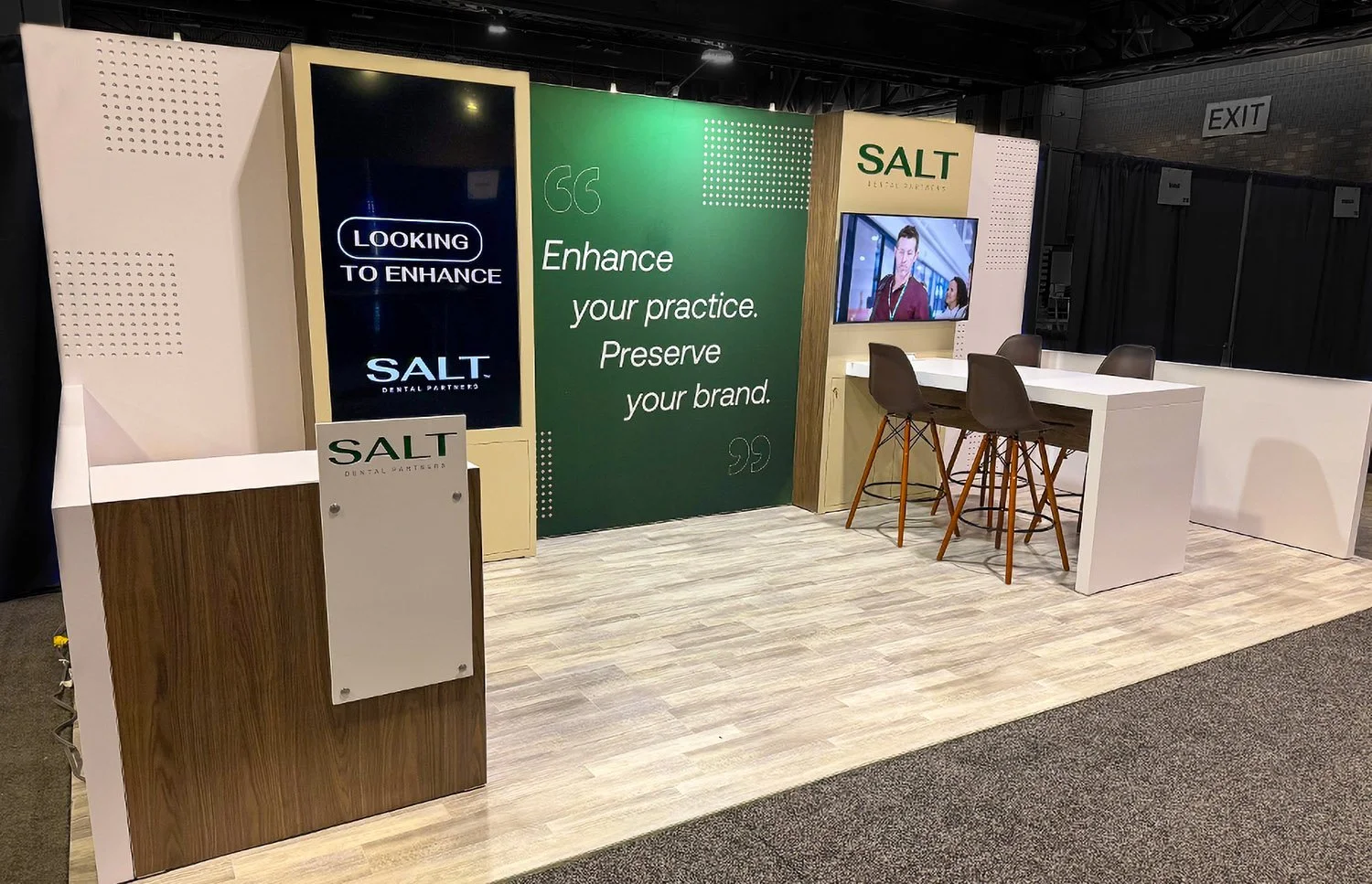
For years, increasing the footprint was often the default move. More square footage suggested more presence. Larger structures implied greater impact.
What is changing is not the value of scale. It is the tolerance for confusion.
Audiences move quickly. They scan, assess, and decide within seconds whether something is worth their time. If the story is not clear, size does not help. It amplifies the problem. A large booth with an unclear message feels heavy rather than impressive.
Across recent projects and industry events, we are seeing fewer oversized, overbuilt environments and far more intentional use of space. Booths in the 20x20 to 40x40 range are common, and many of them are performing extremely well.
We touched on this broader shift in CES 2026 Through a Builder’s Eye. Here, we are looking at what it means in practical terms.
Size Without Purpose Is Noticeable
Trade show audiences move quickly. Within seconds, they decide whether to step in or keep walking. A large booth that lacks clarity can feel unfocused rather than impressive.
Multiple messages competing. Screens layered without hierarchy. Structure that occupies space but does not guide behavior.
By contrast, a well-organized footprint, regardless of size, makes the experience intuitive. Visitors understand where to go, what to look at, and what the brand is offering.
The difference is not size. It is intention.
What We Are Seeing Across the Floor
Across shows and categories, a few themes repeat:
20x20 and 30x30 booths designed with clear zoning
Modular systems like beMatrix frames used strategically
AV integrated early in the design process
Layouts that prioritize clarity and flow
These decisions are not about shrinking ambition. They are about focusing it.
The strongest booths feel composed. Nothing is accidental, and nothing is unnecessary.
Height and Scale Still Matter
This is not an argument against larger builds. Double decks and vertical structures remain effective when they solve specific challenges.
Additional meeting space. Improved sightlines. Clear architectural hierarchy.
When scale supports function, it feels appropriate and confident. When it exists without a clear role, it can feel excessive.
We see this most clearly in well-planned trade show booth builds where structure, graphics, and AV are aligned from the start.
Bigger Needs a Clear Role
As expectations evolve, larger booths are being evaluated more carefully.
What does the added space allow the brand to do better?
How does the footprint improve engagement or understanding?
Is the scale reinforcing the strategy?
These questions tend to produce stronger work.
The booths that resonate today are not necessarily smaller. They are more deliberate.
Make the Square Footage Count
The measure of a successful booth is not its size, but its effectiveness.
If a footprint expands, the strategy should expand with it. If it stays compact, each element should carry its weight.
Scale continues to matter. It simply needs to be purposeful.
If you are planning a larger presence, start by defining what that scale needs to accomplish. The earlier design and build teams align on that question, the stronger the outcome will be. Thoughtful scale does not happen by accident.